
 GLINR Studios
One control plane, one agent
The control plane is one Go binary; nodes you add run a small separate agent. On a single server the control plane runs alone.
Use case: One cheap server
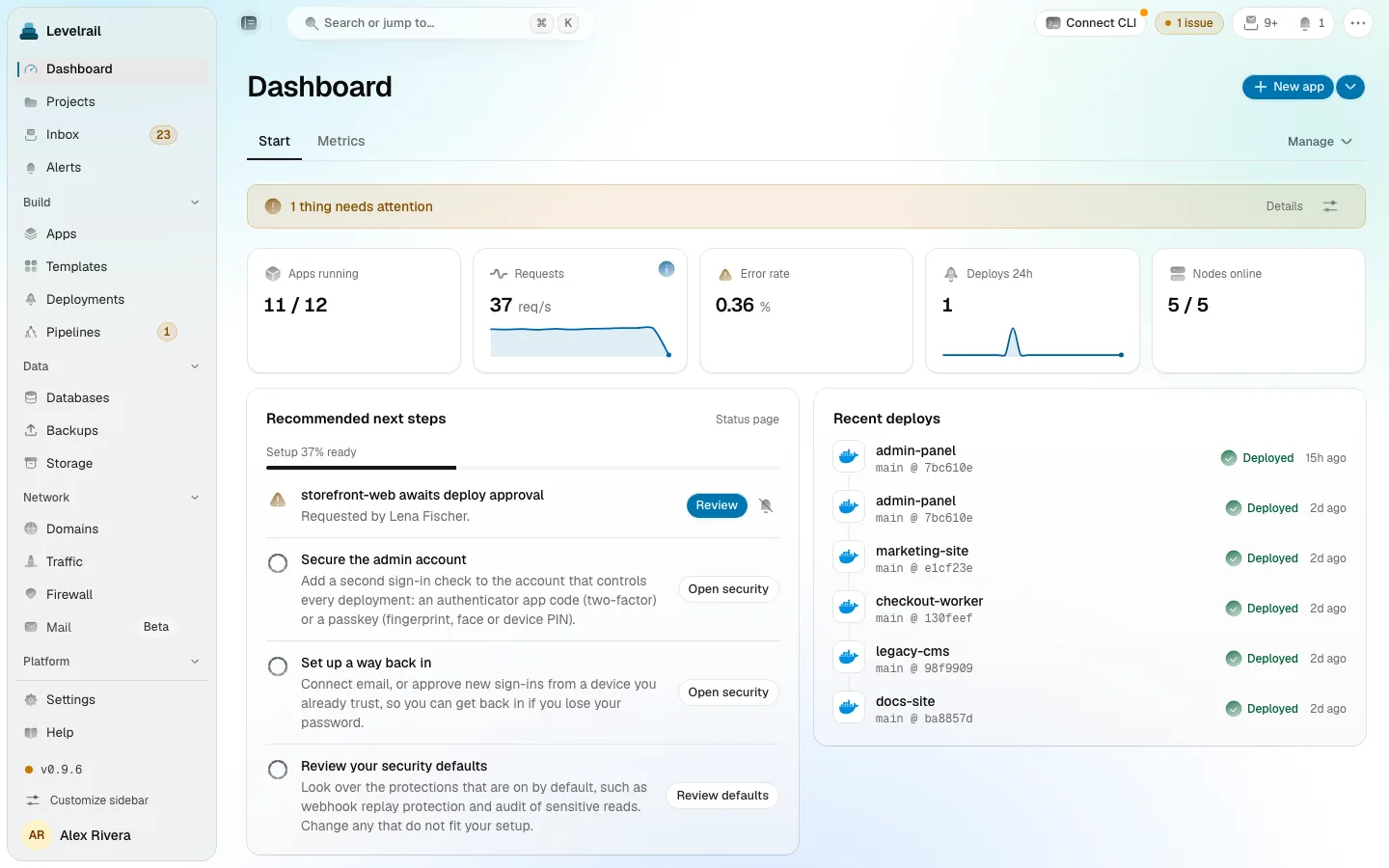
Levelrail runs several side projects on one small Linux VPS. The control plane and the agent run together in one process, so there is nothing extra to install, and the only bill is the server you already rent. A single node is the best-tested setup.
docker pull ghcr.io/glincker/levelrail:latest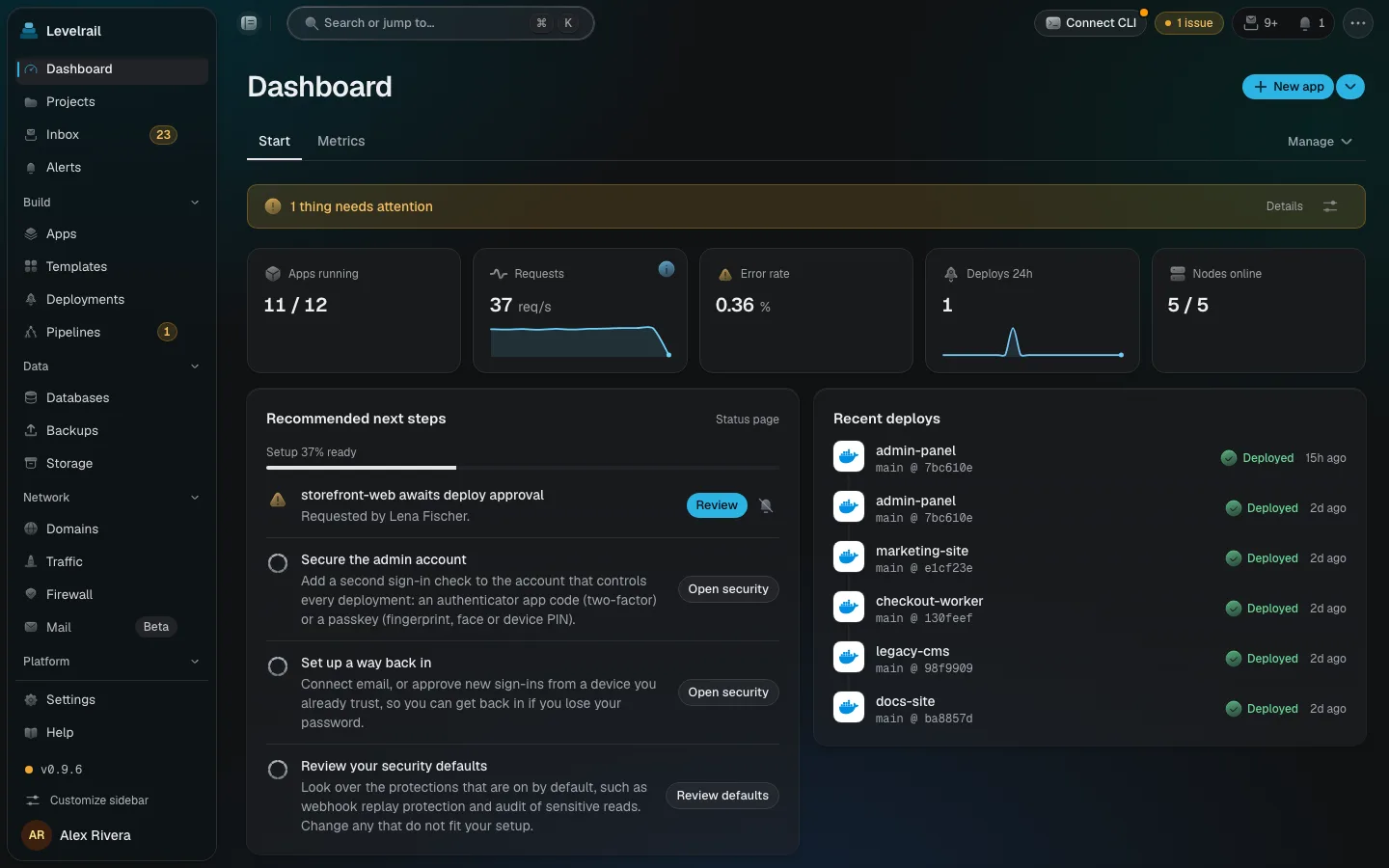
The control plane is one Go binary; nodes you add run a small separate agent. On a single server the control plane runs alone.
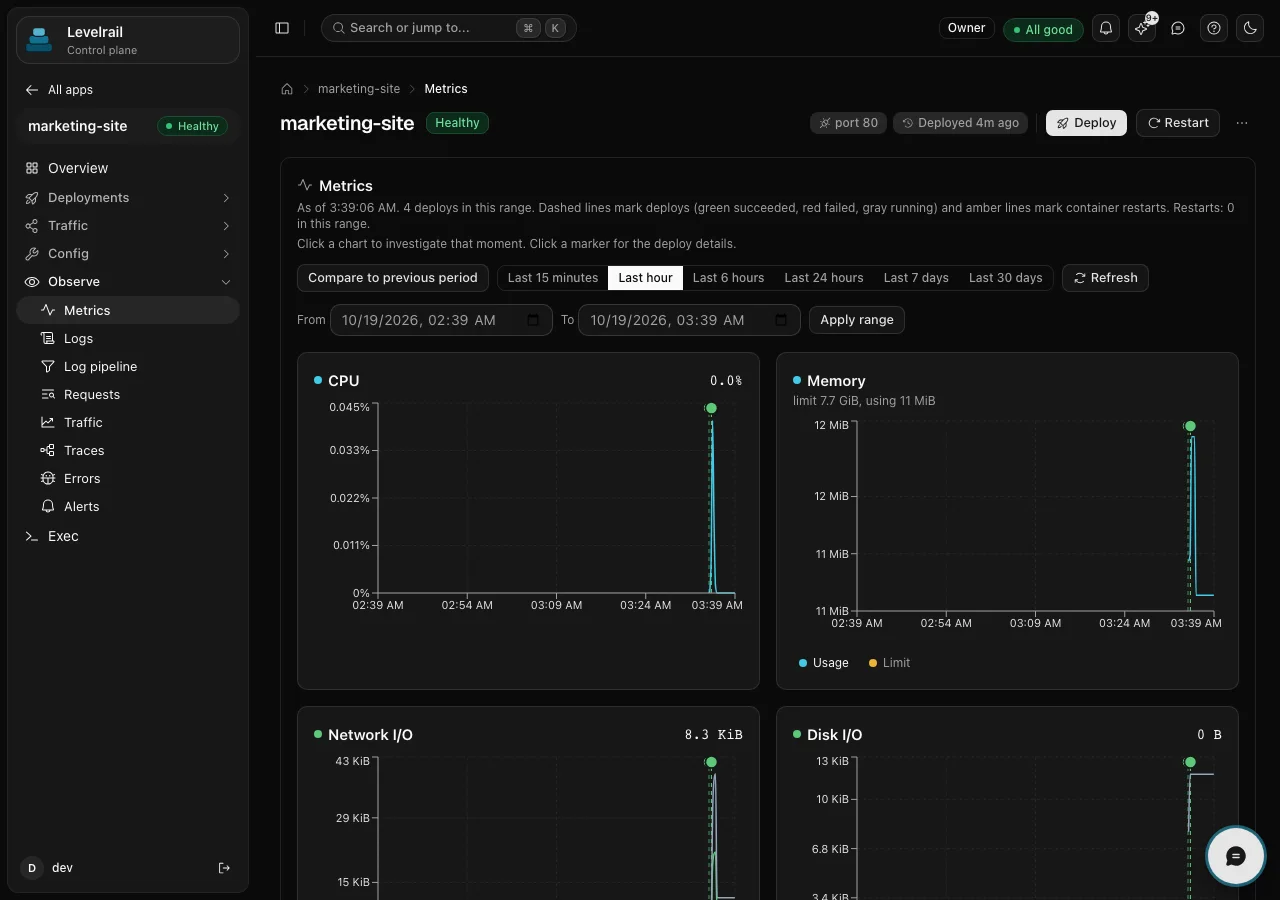
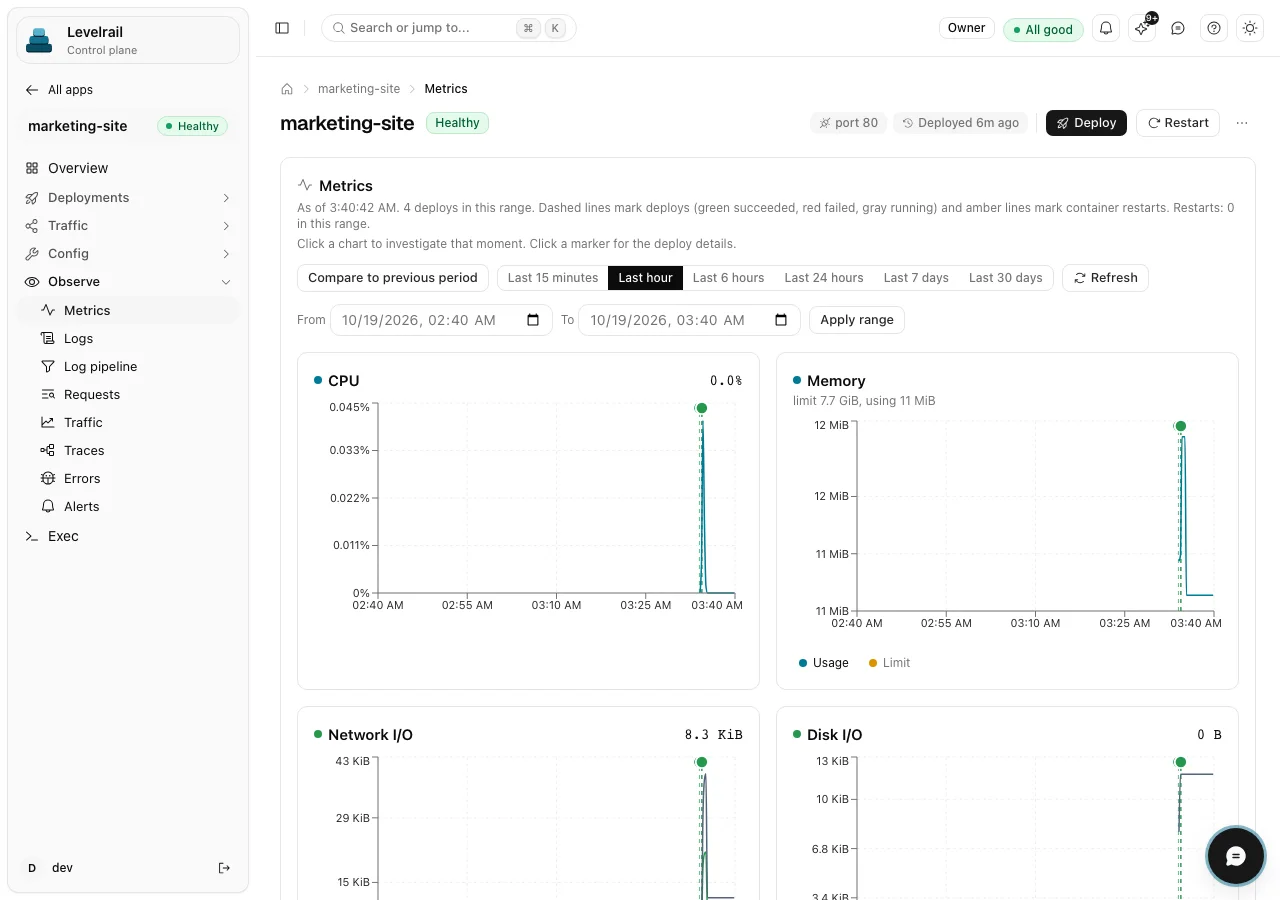
Metrics at 15 second resolution and searchable logs stay on the node, so there is no Grafana or log shipper to set up.
An app with no requests for a time you choose stops, frees its memory and wakes on the next request. Setup is in sleep when idle.
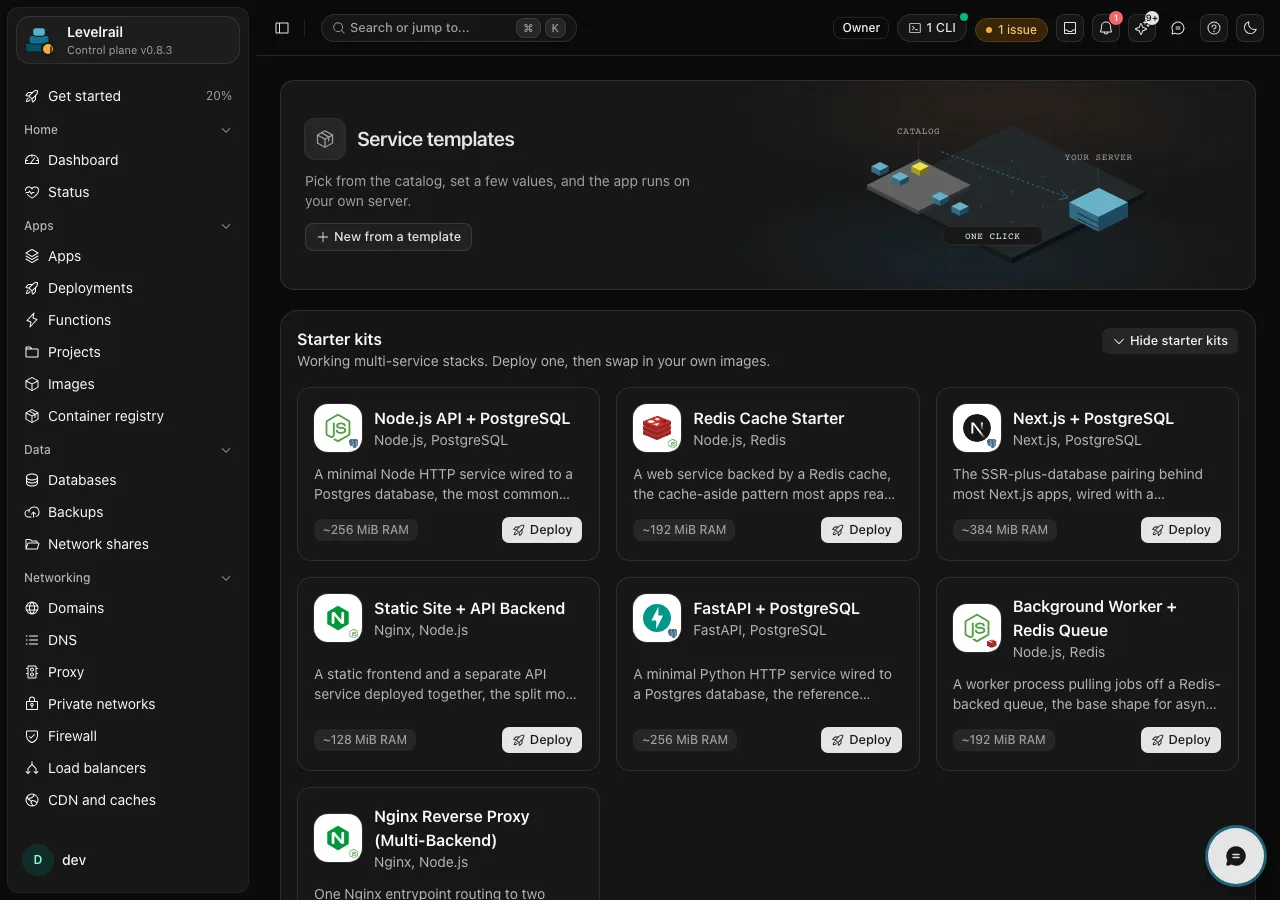
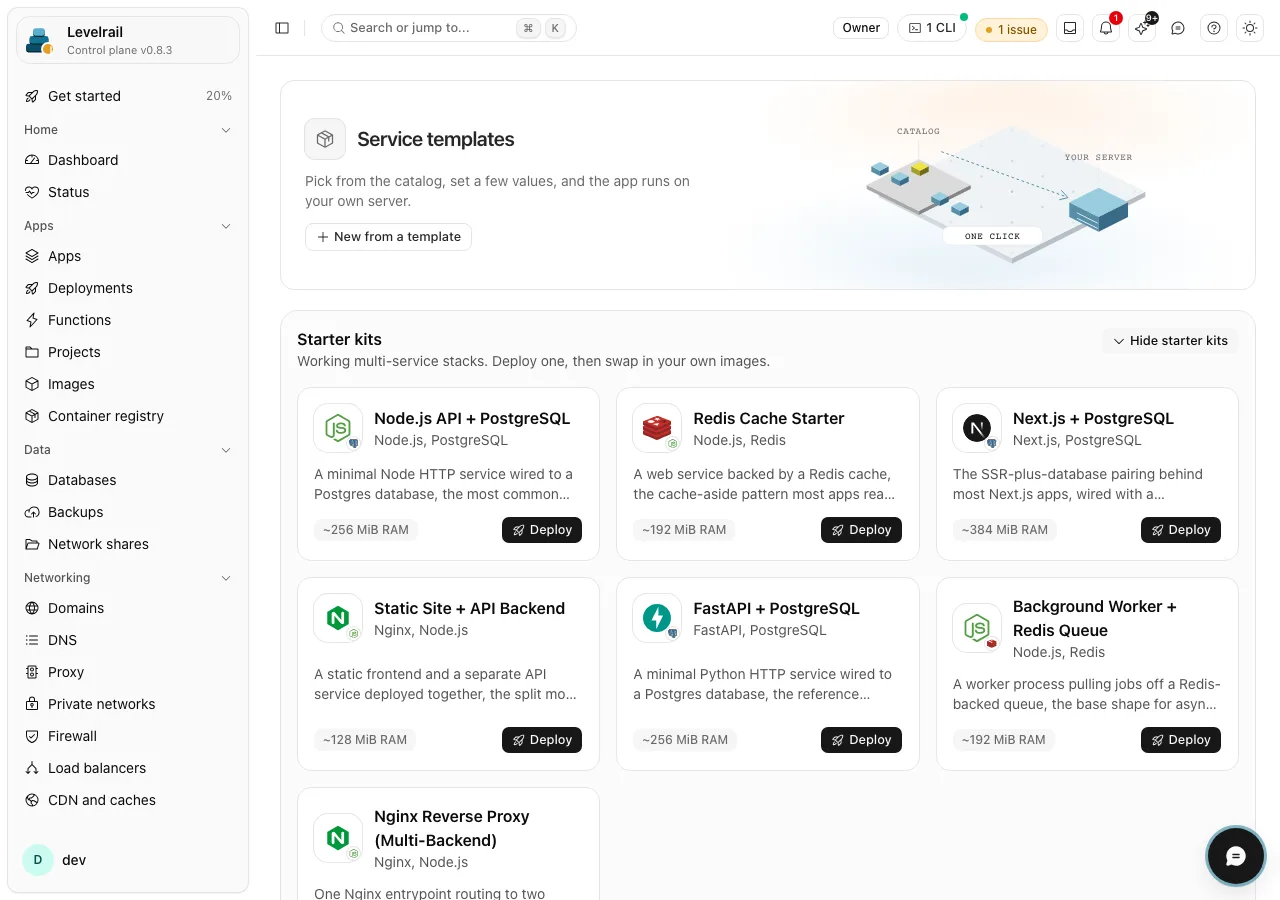
Pick the database or tool a project needs from the template catalog, including Postgres and Redis.
Levelrail is Apache 2.0 licensed, with no license key. See pricing.
Rent a small Linux VPS and run the install command.
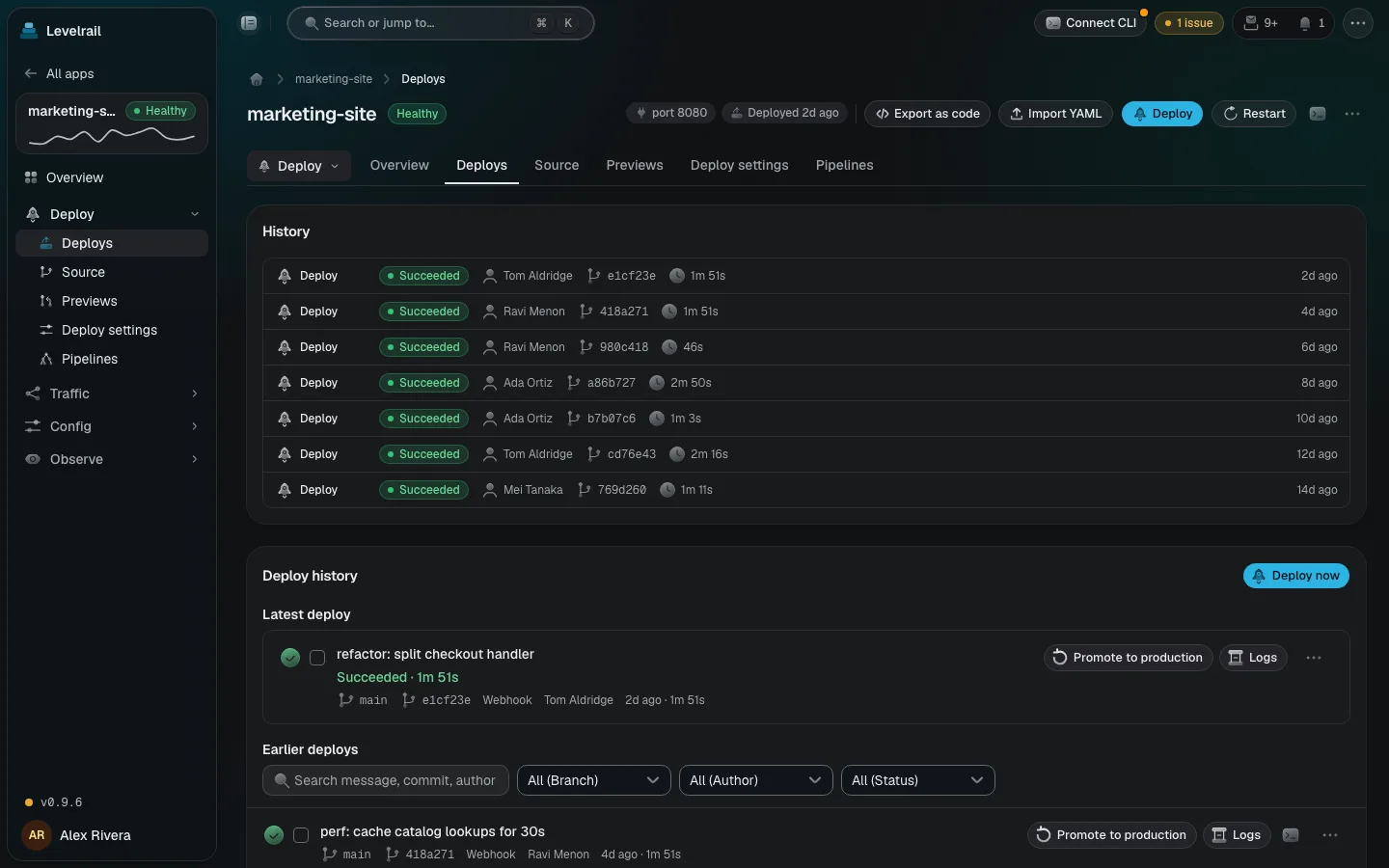
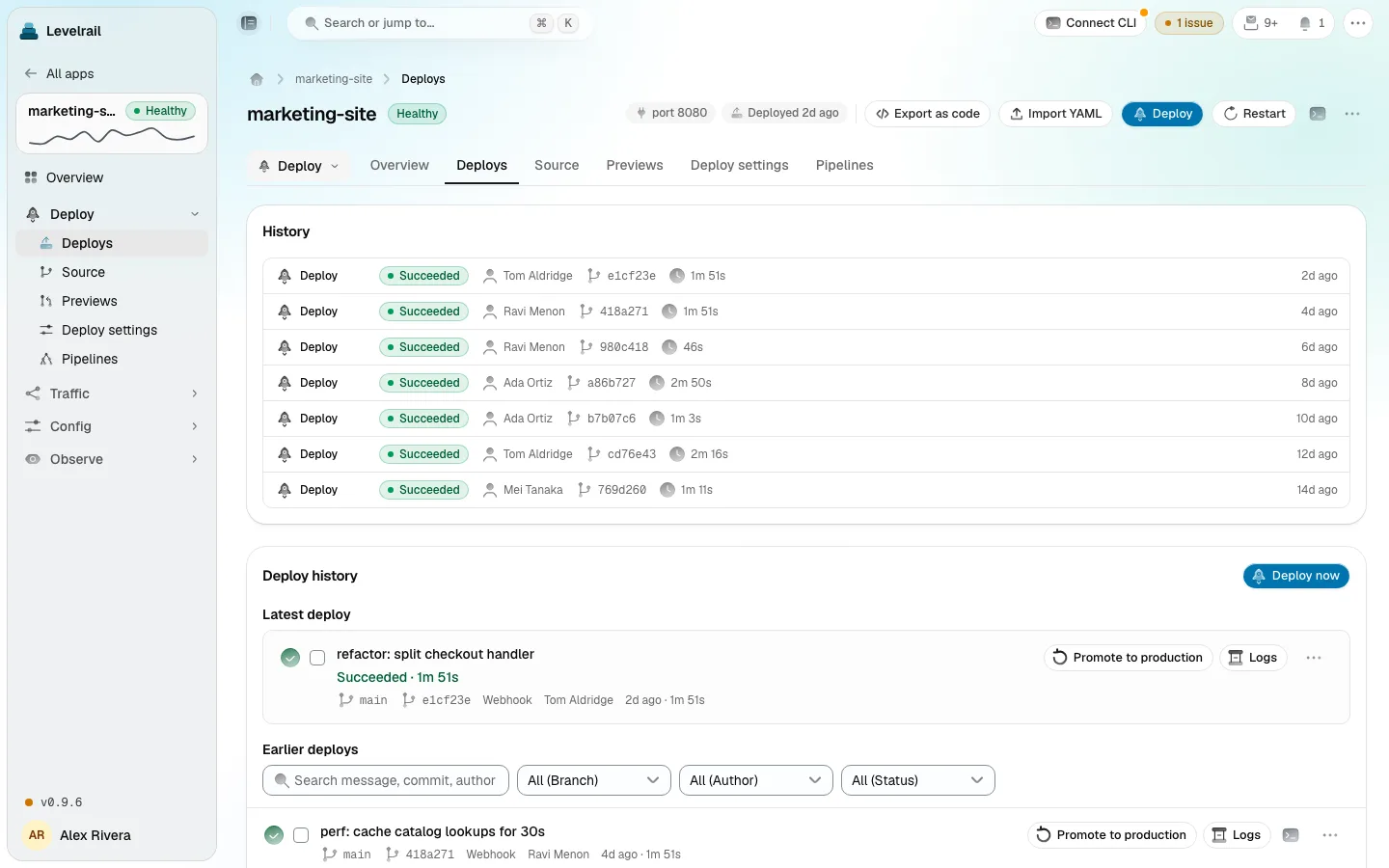
Create an app from a repository or an image, then point a domain at the server.
Turn on sleep when idle for the projects that get little traffic.
Scope and maturity, stated plainly so you can plan around them.
Maturity differs by feature. Feature status lists what is stable, beta or behind a flag, with the evidence for each.
A 1 vCPU, 1 GB server runs the control plane, and 2 vCPU with 2 GB is more comfortable once builds and apps run. These are starting points, not benchmarked minimums.
Yes. Each project is its own app with its own domain, environment variables, logs and rollback history, and single-node installs are the best-tested setup. If the server sits at home instead of in a data center, see the homelab use case.
No. There is no license key, so your cost is the server itself.
One command installs the control plane. Apache 2.0, no license key.
docker pull ghcr.io/glincker/levelrail:latest